
Two Violations, Two Separate Surcharges
You received a DUI conviction in Arkansas, and within the same three-year lookback window you caused an at-fault accident with property damage exceeding $1,000. Your license was suspended under Arkansas DFA Driver Control authority, you filed SR-22 proof of financial responsibility, and you assumed the two violations would merge into a single high-risk premium tier. They do not.
The structural confusion comes from how carriers describe their underwriting tiers. Standard-tier carriers (State Farm, Allstate, Nationwide) reject dual-violation applicants outright during the first 36 months after conviction. Most suspended drivers quote standard carriers first, receive rejections without explanation, then assume all carriers treat them identically — they waste two to three weeks before discovering the non-standard tier exists and writes their profile.
Compare car insurance rates in your state
Get quotes from licensed carriers — no obligation, no spam, results in minutes.
Get Your Free QuoteArkansas High-Risk Monthly Premium
$226–$347/mo
Arkansas drivers with DUI convictions pay 48–54% more than clean-record drivers for minimum liability coverage, before adding the at-fault accident surcharge on top. The range reflects variation by age, county, and carrier tier.
ValuePenguin + Insurify after-DUI by-state analysis, 2026
Why the Two Violations Stack Instead of Merging
Arkansas uses a points-based Driver Improvement Program administered by DFA Driver Services, but DUI convictions and at-fault accidents occupy separate regulatory categories. A DUI conviction triggers mandatory SR-22 filing under Arkansas Code §5-65-111 and §27-19-59, classified as a Safety Responsibility action rather than a points accumulation. An at-fault accident with damages exceeding $1,000 triggers a separate financial responsibility filing requirement under §27-19-59 if you were uninsured at the time, but even when insured the accident remains on your Motor Vehicle Report as a chargeable event for underwriting purposes.
Carriers price these violations separately because they signal different risk profiles. The DUI conviction indicates impaired-driving risk; the at-fault accident indicates collision-frequency risk. Actuarial models treat them as independent variables, so the surcharges multiply rather than merge. A driver with only a DUI pays the DUI surcharge. A driver with only an at-fault accident pays the accident surcharge. A driver with both pays both, stacked.
The stacking mechanism varies slightly by carrier. Bristol West and Dairyland apply the DUI surcharge first, then calculate the at-fault accident surcharge as a percentage of the already-increased base premium, producing a compounding effect. Progressive and The General apply both surcharges to the original clean-record base premium, then sum them, producing a slightly lower combined total.
Standard-tier carriers reject dual-violation applicants for 36 months after conviction.
Which Carriers Write Dual-Violation Policies in Arkansas

Bristol West, Dairyland, The General, Progressive (non-owner and standard auto), and Direct Auto write dual-violation policies in Arkansas without requiring manual underwriting review. Bristol West and Dairyland require six-month pay-in-full for new DUI cases, which blocks budget-constrained drivers even when the quoted premium is competitive.
GAINSCO and National General write SR-22 policies in Arkansas but apply stricter underwriting rules for dual-violation applicants. GAINSCO requires manual review when the at-fault accident involved bodily injury or total loss, and approval takes 5–7 business days rather than instant bind. National General accepts dual-violation applicants only when the at-fault accident occurred more than 18 months before the DUI conviction, treating the temporal separation as a mitigating factor. Geico and State Farm file SR-22 in Arkansas but reject dual-violation applicants outright during the first 36 months after conviction, regardless of whether you completed DWI education or installed an ignition interlock device.
Related Articles
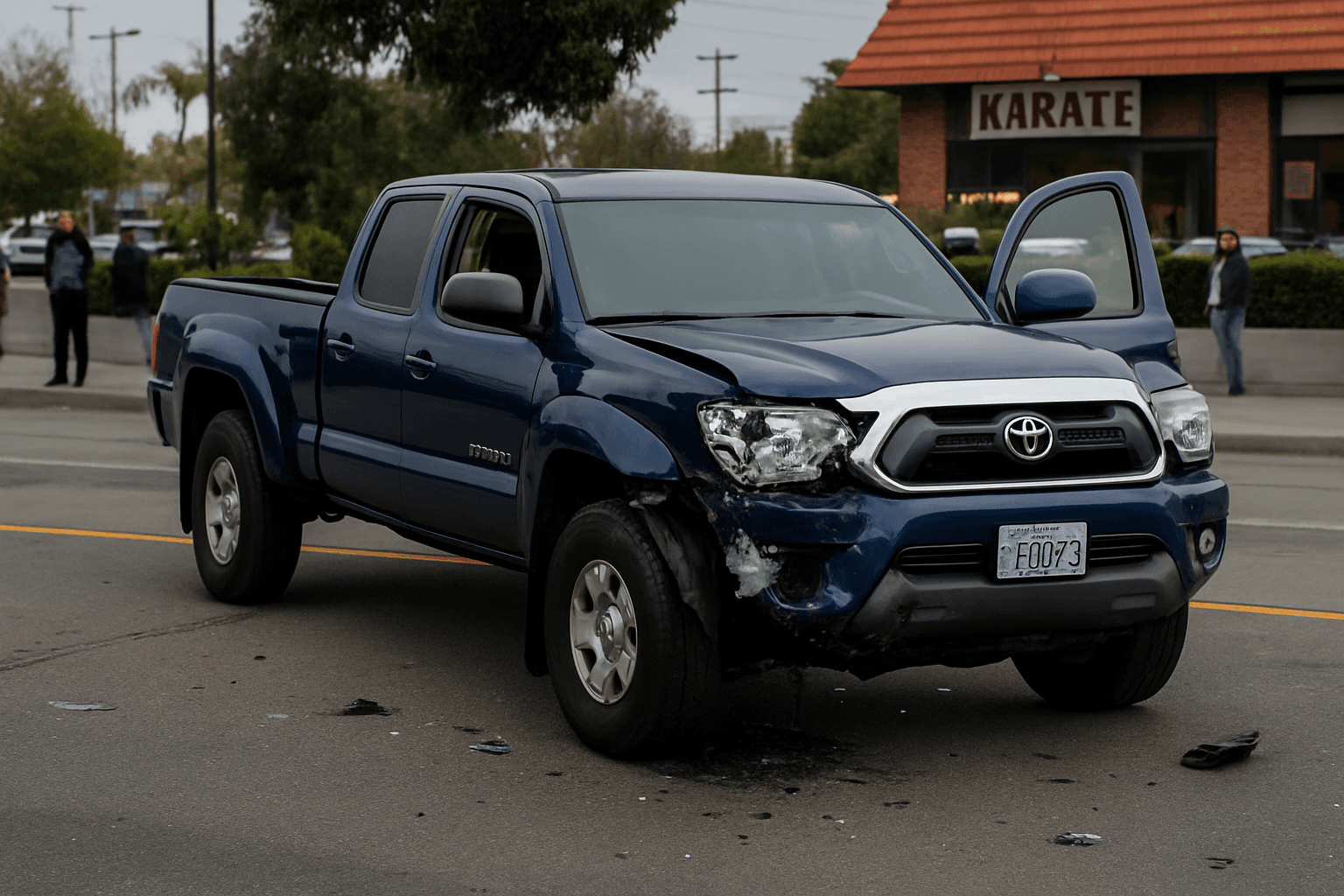



How the At-Fault Accident Affects Your SR-22 Filing Requirement
The DUI conviction triggers the SR-22 filing requirement in Arkansas; the at-fault accident does not create a separate SR-22 obligation unless you were uninsured at the time of the collision. Arkansas Code §27-19-59 requires proof of financial responsibility following a reportable accident only when the driver was uninsured or failed to satisfy a judgment for damages. If you carried liability coverage at the time of the at-fault accident, the accident itself does not extend your SR-22 filing period or create a second filing requirement — it simply increases your premium through the at-fault surcharge applied by your carrier.
The practical consequence: your SR-22 filing period runs from your DUI conviction date, not from the at-fault accident date, and the filing duration is set by DFA Driver Control based on the DUI conviction alone. Arkansas does not publish a fixed SR-22 filing period in statute, but DFA Driver Control typically requires SR-22 filing until you complete all reinstatement requirements, including payment of the $150 reinstatement fee, completion of a state-approved DWI education program, and satisfaction of any court-ordered conditions such as ignition interlock device installation. The at-fault accident does not reset this timeline or add additional months to your filing obligation, but it does increase your monthly premium cost for the entire duration of the SR-22 filing period.
If the at-fault accident occurred while you were uninsured, Arkansas DFA Driver Control may impose a separate financial responsibility filing requirement under the Safety Responsibility Act, which runs concurrently with your DUI-triggered SR-22 filing. In this scenario you do not file two separate SR-22 certificates — the single SR-22 filing satisfies both the DUI-triggered requirement and the uninsured-accident-triggered requirement simultaneously. Your carrier files one SR-22 form listing both triggering events, and DFA Driver Control tracks compliance under a unified filing record.
Arkansas Reinstatement Fee
$150
Arkansas charges a flat $150 reinstatement fee after DUI suspension, paid to DFA Driver Services before your license is restored. The fee applies once per suspension event, not per violation, so the at-fault accident does not trigger a second $150 charge.
Arkansas DFA Driver Services reinstatement fee schedule
The Timing Window Most Dual-Violation Drivers Miss
Arkansas DFA Driver Control suspends your license immediately upon DUI conviction, and the hard suspension period lasts a minimum of 6 months for a first-offense DUI under Arkansas Code §5-65-111. You cannot apply for a restricted driving permit until you serve the first 30 days of the suspension, and the restricted permit requires proof of SR-22 filing before DFA Driver Control approves your application. Most dual-violation drivers contact carriers after the 30-day hard suspension ends, assuming they can secure SR-22 coverage and apply for the restricted permit in the same week. They cannot. Non-standard carriers require 3–5 business days to process SR-22 filings for dual-violation applicants, and DFA Driver Control requires the SR-22 certificate to appear in their system before scheduling your restricted permit hearing.
The structural blocker: if you wait until day 31 to start quoting carriers, you lose another week to the SR-22 filing lag, pushing your restricted permit application to day 38 or later. DFA Driver Control schedules restricted permit hearings 10–14 business days after receiving your completed application, which means your earliest possible restricted permit approval falls around day 52–56 of your suspension — nearly two months after conviction, when you assumed you would regain limited driving privileges at the 30-day mark. The at-fault accident does not directly cause this delay, but it narrows your carrier options to the five non-standard writers listed above, and those carriers process dual-violation applications more slowly than single-violation cases because underwriting must verify both the DUI conviction date and the at-fault accident details before binding coverage.
Compare Carriers Before Your Hard Suspension Ends
Start quoting non-standard carriers during the first 30 days of your hard suspension, before you are eligible to apply for a restricted permit. Request SR-22 quotes from Bristol West, Dairyland, The General, Direct Auto, and Progressive simultaneously, specifying both the DUI conviction date and the at-fault accident date in your application. Carriers calculate premiums differently when the two violations occurred within 90 days of each other versus 12–24 months apart, and you will not know which carrier offers the lowest combined-surcharge premium until you receive bindable quotes from all five. The premium spread runs $80–$140/month between the highest and lowest quotes for the same coverage limits in the same Arkansas county.
Once you receive quotes, verify that each carrier will file SR-22 electronically with Arkansas DFA Driver Control and confirm the filing timeline before binding coverage. Electronic SR-22 filing reaches DFA Driver Control within 1–2 business days; paper SR-22 filing takes 5–7 business days and delays your restricted permit application by a full week. Bind coverage with the carrier offering the lowest premium and electronic filing, then request a copy of your SR-22 certificate for your restricted permit application packet. DFA Driver Control requires proof that the SR-22 filing is active in their system before approving your restricted permit, and having your own copy of the certificate allows you to verify the filing status by calling DFA Driver Services directly rather than waiting for your carrier to confirm.