
DWI Insurance With No Prior Coverage — Arkansas
Free to compare
The Circuit Court Wants Proof You Cannot Get
You received a DWI suspension in Arkansas, never held auto insurance before, and now the circuit court petition instructions list proof of SR-22 insurance filing as a required document for your Restricted Hardship License application. The court clerk told you to call insurers. Three carriers rejected your quote request outright. Two quoted you $280–$310 per month with six-month prepay requirements. One quoted $195 per month but would not file the SR-22 until after payment cleared, which takes 3–5 business days—too late for your court date.
Arkansas treats DWI with no prior coverage as a dual-risk profile: the DWI conviction signals behavioral risk, and the absence of insurance history signals verification risk. Carriers cannot pull your driving record from an insurer database because you were never in one. They cannot confirm you were uninsured-but-legally—because you never registered a vehicle or filed proof with Arkansas DFA. The structural friction: you need SR-22 to petition the court, but carriers price no-prior-coverage DWI applicants higher than standard DWI filers or refuse to quote entirely.
“Arkansas courts accept non-owner SR-22 for hardship petitions identically—the certificate is the same, but the premium is $60–$120 lower per month.”

Compare Arkansas Rates for Drivers With a DUI
Get My Arkansas DUI Insurance Quote$180–$310/mo
Arkansas No-Coverage DWI Premium
Standard DWI SR-22 filers with continuous prior coverage pay $140–$220/month in Arkansas. No prior coverage adds $40–$90/month because carriers cannot verify claims history or prior lapses. Prepayment requirements (3–6 months upfront) are common.
Carrier underwriting guidelines for high-risk applicants, Arkansas market, 2025
Why No Prior Coverage Changes the Filing
SR-22 is not insurance—it is a certificate filed by your insurer with Arkansas DFA Office of Driver Services confirming you carry at least the state minimum liability limits: $25,000 bodily injury per person, $50,000 per accident, $25,000 property damage. Arkansas requires SR-22 for DWI reinstatement and hardship license eligibility. The certificate stays active for 3 years after your conviction date.
Carriers writing SR-22 policies typically pull your insurance history from a national database that tracks coverage lapses, claims, and prior policy dates. If you never held insurance, that database returns null. The carrier cannot verify you were legally uninsured (e.g., you did not own a vehicle and walked or used public transit) versus illegally uninsured (you drove without coverage and were never caught). DWI conviction plus null history triggers underwriting flags that raise premiums or cause automatic rejections.
Arkansas DFA does not distinguish between no-prior-coverage applicants and lapse applicants in SR-22 filing requirements—both must file. But carriers treat them differently at quote time. You are not penalized by the state; you are penalized by carrier risk models that lack data to price you accurately.

The structural blocker: Arkansas courts require SR-22 before the hardship hearing, but carriers quoting no-prior-coverage DWI applicants often demand 3–6 months prepayment before filing the certificate.





Timing the SR-22 Filing to Your Court Date
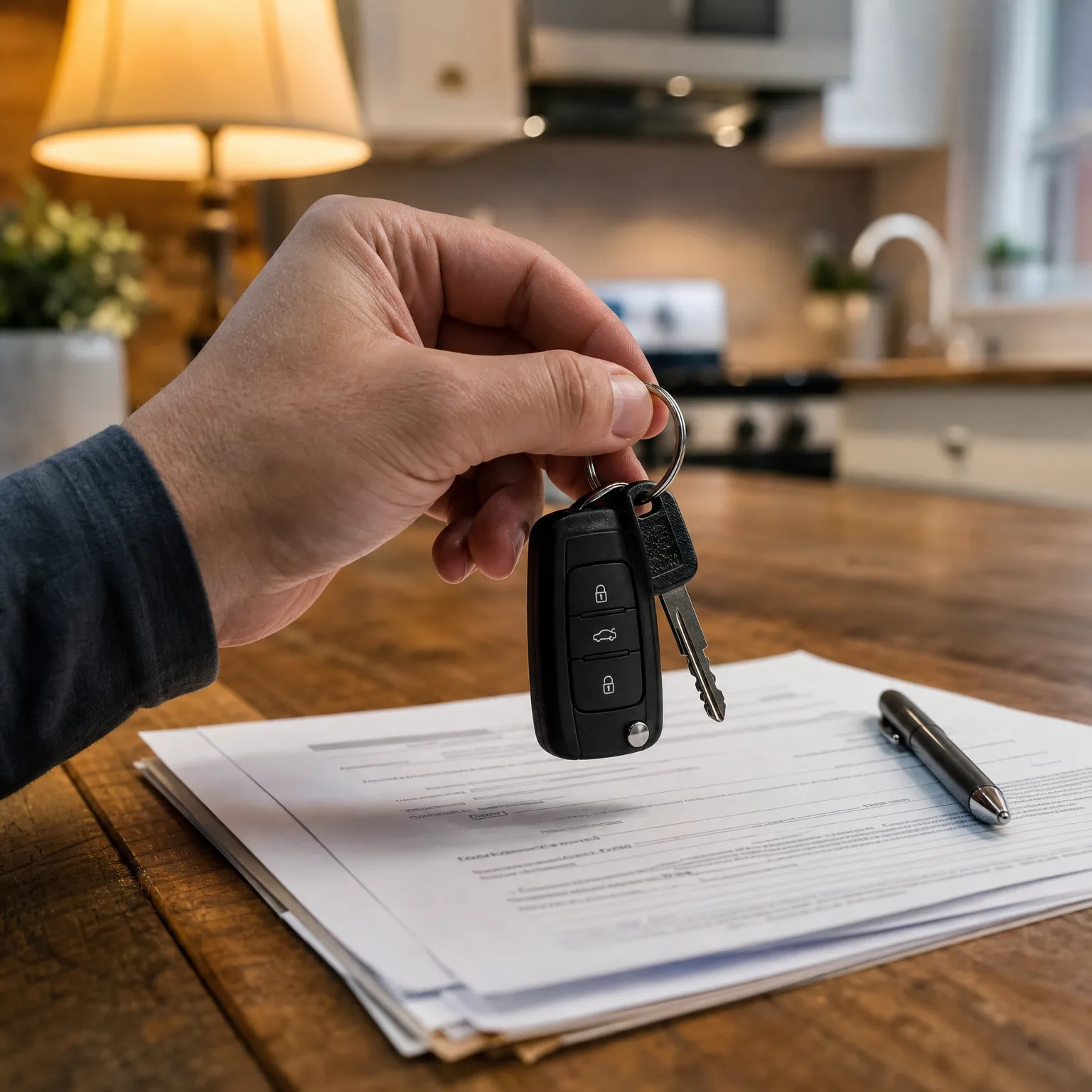
Arkansas circuit courts require proof of SR-22 filing at the hardship petition hearing. The DFA processes SR-22 certificates within 1–2 business days after the carrier submits electronically. Most carriers file the SR-22 within 24–48 hours after your first payment clears, but prepayment policies create a timing gap: if the carrier requires 3 months upfront and processes payment via ACH, total time from application to DFA-confirmed SR-22 is 5–7 business days.
Count backward from your court date. If your hearing is 10 days out, you need to apply, pay, and confirm filing no later than 7 days before the hearing to absorb payment processing, carrier filing delay, and DFA confirmation time. If your court date is closer than 7 business days, call the circuit clerk and request a continuance—judges grant continuances for hardship applicants securing insurance more readily than they grant petitions without SR-22 proof. Missing the SR-22 requirement at your hearing typically results in automatic denial; you must refile the petition and wait 30–60 days for a new court date.
Some carriers offer same-day SR-22 filing if you pay via credit or debit card and apply before 2 PM Central. Progressive and Geico advertise same-day filing but honor it only for applicants who pass automated underwriting—no-prior-coverage DWI cases often trigger manual review, which adds 2–3 business days. Direct Auto and The General file same-day for applicants who prepay 6 months upfront. Dairyland files within 48 hours regardless of payment method.
3 years
Arkansas SR-22 Filing Period
Arkansas DFA requires continuous SR-22 filing for 3 years after your DWI conviction date. If your policy lapses or cancels during that period, the carrier notifies DFA electronically and your hardship license is suspended immediately. Reinstatement after lapse requires a new $100 fee and proof of new SR-22 filing.
Arkansas Code Annotated § 27-22-104

Prepayment Requirements and Monthly Billing
Carriers writing no-prior-coverage DWI applicants in Arkansas typically require 3–6 months prepayment. This is underwriting policy, not state law. The carrier mitigates risk by collecting premium upfront in case you cancel after receiving the SR-22 certificate. Monthly billing without prepayment is rare but available: State Farm offers monthly billing to Arkansas DWI applicants with no prior coverage if you provide a bank account for ACH autopay and agree to a 12-month policy term. USAA offers monthly billing to eligible members (military affiliation required) with no prepayment.
If you cannot prepay 3–6 months upfront, non-owner SR-22 reduces the prepayment amount proportionally. At $140/month average for non-owner coverage, 3-month prepayment totals $420 compared to $600–$900 for owner policies. Some applicants split the prepayment by applying for a policy 30 days before their court date, paying the first month to start the policy, then paying the remaining prepayment requirement across two paychecks before the SR-22 lapses.
Getting Quoted Without Rejection
Start with Dairyland, The General, and Direct Auto—these carriers specialize in high-risk applicants and accept no-prior-coverage DWI cases in Arkansas without automatic underwriting rejection. Call rather than applying online; phone underwriters can override automated flags that cause instant online rejections. Have your driver's license number, DWI conviction date, and court date ready. Ask explicitly whether the carrier files SR-22 electronically and confirm the filing timeline before paying.
If those three reject you or quote above $250/month, try Progressive and Geico online. Both display instant quotes for non-owner SR-22 but send no-prior-coverage DWI applicants to manual underwriting review after you submit payment information. Approval rates improve if you can provide proof you did not own a vehicle during the period you lacked insurance—lease agreements showing you rented without a car, public transit passes, or employer records showing you commuted via carpool. Underwriters treat documented non-ownership differently than unexplained coverage gaps.
Avoid applying to more than five carriers in a 14-day period. Each quote request generates a credit inquiry or MVR pull that appears on your record. Stacking inquiries signals desperation to underwriters and lowers approval odds for borderline applications.
Non-Owner SR-22 as the Cheapest Path
Non-owner SR-22 is liability-only coverage for drivers who do not own a vehicle but need to satisfy state SR-22 filing requirements. It covers you when driving borrowed or rented vehicles. Arkansas DFA and circuit courts accept non-owner SR-22 filings for hardship license petitions—the certificate itself is identical to owner-policy SR-22. Carriers price non-owner policies lower because they carry no collision or comprehensive exposure and the insured drives less frequently. For no-prior-coverage applicants, non-owner premiums typically run $120–$200/month in Arkansas, compared to $180–$310/month for owner policies.
Four carriers writing non-owner SR-22 in Arkansas with no prior coverage accept applications: Progressive, Geico, Dairyland, and The General. Progressive and Geico quote online but reject approximately 40% of no-prior-coverage DWI applicants at underwriting review. Dairyland and The General accept most applications but require phone quotes and 3-month prepayment. GAINSCO writes non-owner SR-22 but currently requires prior insurance history for Arkansas DWI applicants. Bristol West writes non-owner policies but does not file SR-22 in Arkansas as of current state authorization.
Get Your Free Quote
Get My Arkansas DUI Insurance QuoteFrequently Asked Questions
Can I get SR-22 in Arkansas if I never had car insurance before?
Yes. Arkansas DFA accepts SR-22 filings from applicants with no prior insurance history. Carriers treat no-prior-coverage DWI applicants as higher risk and typically charge $180–$310/month with 3–6 month prepayment requirements, compared to $140–$220/month for standard DWI filers with continuous coverage history.
Does Arkansas require SR-22 for DWI hardship license?
Yes. Arkansas circuit courts require proof of SR-22 insurance filing before granting a Restricted Hardship License for DWI suspensions. The SR-22 must be active and filed with Arkansas DFA before your court hearing. Judges deny hardship petitions without valid SR-22 proof and require you to refile 30–60 days later.
How long does SR-22 filing take in Arkansas?
Arkansas DFA processes SR-22 certificates within 1–2 business days after your carrier files electronically. Most carriers file within 24–48 hours after your first payment clears. If the carrier requires prepayment via ACH, total time from application to DFA-confirmed SR-22 is typically 5–7 business days.
What is non-owner SR-22 insurance in Arkansas?
Non-owner SR-22 is liability-only coverage for drivers who do not own a vehicle but need SR-22 filing to satisfy Arkansas reinstatement or hardship license requirements. It covers you when driving borrowed or rented vehicles. Non-owner policies cost $120–$200/month for no-prior-coverage DWI applicants in Arkansas, compared to $180–$310/month for owner policies.
Will Progressive insure me for SR-22 with no prior coverage in Arkansas?
Progressive accepts applications from Arkansas DWI applicants with no prior insurance history but rejects approximately 40% during manual underwriting review. Approval odds improve if you can provide documentation showing you did not own a vehicle during the period you lacked coverage, such as rental lease agreements or public transit records.
How much does DWI insurance cost in Arkansas with no prior coverage?
Arkansas DWI SR-22 insurance for applicants with no prior coverage typically costs $180–$310/month with 3–6 month prepayment requirements. Non-owner SR-22 policies cost $120–$200/month. Standard DWI filers with continuous prior coverage pay $140–$220/month. The premium difference reflects carrier uncertainty about unverifiable insurance history.